Discover the Ligurian Language
Ligurian is a regional language spoken in Liguria and parts of southern France, known for its unique history and maritime heritage.
Swedish dialects vary across regions, with differences in pronunciation, grammar, vocabulary, and cultural identity.
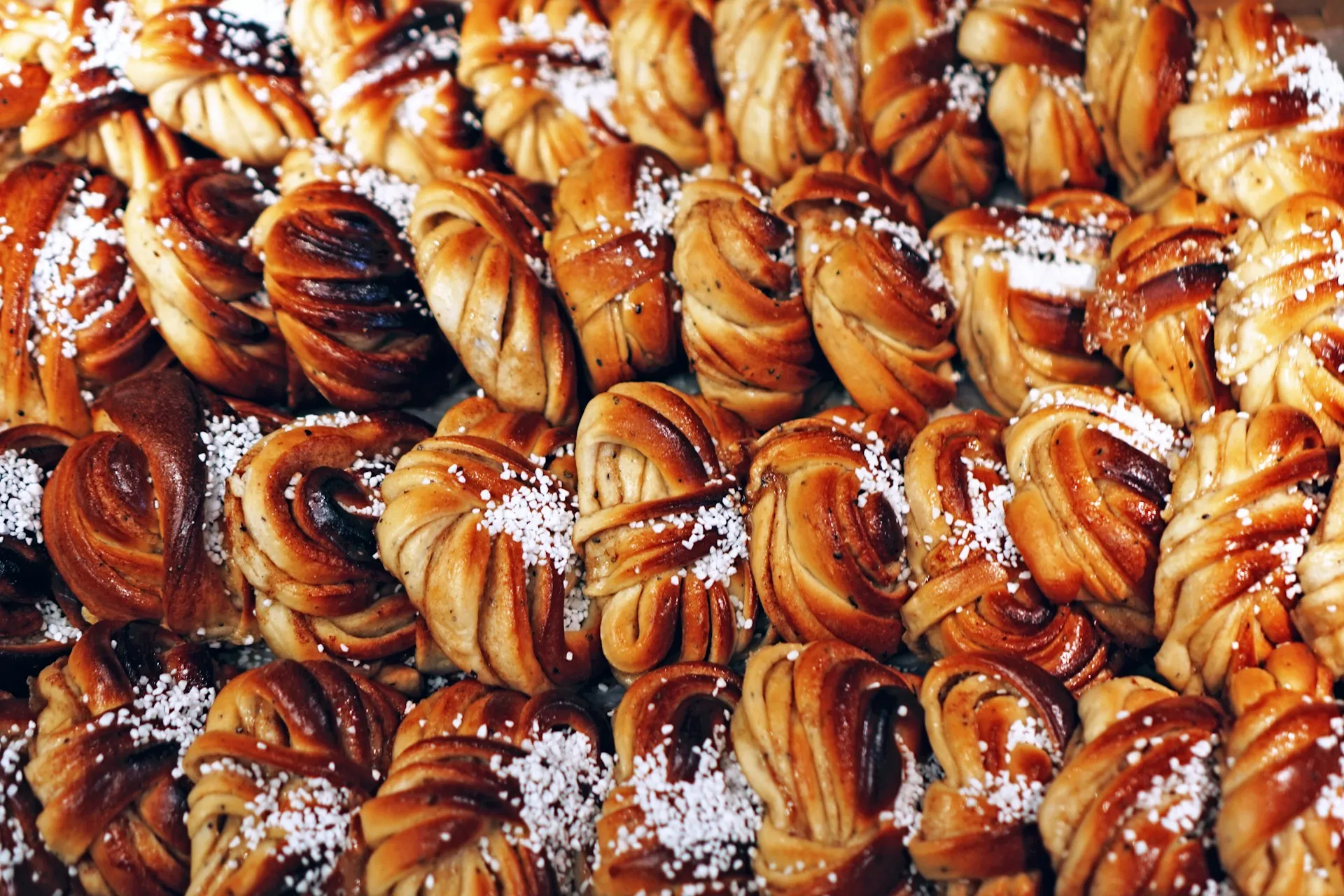
Across Sweden, people speak Swedish in many different ways. These differences are called dialekter or mål. They are generally similar to Standard Swedish, but they use different accents, different pronunciation, and different words. In this post, we are going to see the most common Swedish dialects across the country.
To make them easier to study, dialects are usually divided into six main dialect areas.
Götamål, spoken in much of southern and western Sweden around Göteborg.
Skånska, spoken in the province of Skåne, in the southernmost part of Sweden.
Sveamål, spoken in central Sweden, including the area around Stockholm.
Gotländska, spoken on the island of Gotland.
Norrlandska or Norrlandsmål, spoken across northern Sweden.
Östsvenska mål, spoken in parts of Finland and on the Åland Islands.
Götamål is spoken in western and southern parts of Sweden. One of its best-known varieties is Göteborgska, the dialect spoken in Gothenburg.
Interestingly, Göteborgska is a fairly new dialect. It developed during the 1800s when many people from different parts of Västergötland moved to Gothenburg. As people with different local dialects lived together, a new city dialect slowly formed.
Some common features of Göteborgska include:
A long a sound is often pronounced more like å.
The r sound is more rounded.
The ö sound is often stronger and more noticeable.
The letter i can sound a bit like e.
The letter y can sound closer to ö.
Today, these features are usually less noticeable than they were in the past, especially among younger speakers.
Here are a few words you might hear in Gothenburg:
Bamba – the school cafeteria where students eat lunch.
La and änna – small words that do not have a direct meaning. They are often used to add emphasis or make a sentence sound more natural in the local dialect.
For example, someone might say, "Det är la bra," where la doesn't really translate into English but adds a friendly, local feeling to the sentence.
One of Sweden's most famous dialects is Skånska, spoken in the southern region of Skåne.
Many Swedes immediately recognize Skånska because of its special pronunciation of the letter r. The r is produced farther back in the throat than in many other Swedish dialects. People from other parts of Sweden often joke about this sound, making Skånska one of the country's most recognizable dialects.
Like many dialects, Skånska also has its own vocabulary. Some examples include:
Balle – means "butt" in Skånska, although in other parts of Sweden the word can have a completely different meaning.
Ålahue – literally means "eel head" and is used to call someone an idiot or a silly person.
Skånkor (plural) or skånk (singular) – means "legs."
Flabb – means "mouth." If someone says, "Håll flabben!", they mean "Be quiet!" or "Shut your mouth!"
These local words are part of what makes Skånska so unique and fun to learn.
Sveamål is spoken in central Sweden, including the area around Stockholm and Uppsala. It is the dialect group that has had the biggest influence on Standard Swedish, so learners often hear this pronunciation in schools, on television, and on the radio.
In the Sveamål dialect, the final t in some words can be dropped when speaking quickly. For example, the word huset ("the house") may sound more like huse in casual speech.
Moreover, the letter ö is sometimes pronounced more like a short u sound in certain words or by some speakers.
Gotländska is spoken on the island of Gotland and is one of Sweden's most distinctive dialects.
Long ago, people on Gotland spoke Gutamål, an old dialect that was heavily influenced by Danish and German through trade across the Baltic Sea. Gutamål had many unique words and sounds that were very different from mainland Swedish.
Today, most people on Gotland speak Gotländska, which is much closer to Standard Swedish. However, you can still hear traces of the island's older speech.
One characteristic feature is that the final a in some words is pronounced more like e. This gives the dialect a distinctive sound that many Swedes can recognize immediately.
Norrlandsmål is spoken in Norrland, the huge northern part of Sweden. Norrland covers almost 60% of Sweden's land area, so there isn't just one "Norrland dialect." Instead, there are many local dialects that can sound quite different from one another.
Even though the dialects vary, they do share some common features.
One interesting characteristic is the pronunciation of certain consonants. In many areas:
K can sound more like j.
G can sound similar to tsch or dj.
Because of these sounds, people sometimes mistakenly think that speakers from northern Sweden have a Finnish accent. In reality, these pronunciation patterns are simply part of several northern Swedish dialects.
Another feature is grammar. In many Norrland dialects, adjectives are not always changed to match plural nouns, unlike in Standard Swedish.
Northern Sweden also has many regional words that you might not hear elsewhere in the country.
Here are a few examples:
Nalta – a little, a bit (lite or något).
Bro – a veranda or porch.
Harta – half (hälften or halv).
He – to put or place something (lägga or sätta).
Karra – candy (godis).
Pärer – potatoes (potatis).
Fara – to travel or go somewhere (åka or resa).
Börs – wallet (plånbok).
Huvvaligen, or simply huvva – an expression similar to "Ugh!" or "Yuck!"
The last of the six main dialect groups is Östsvenska mål (Eastern Swedish).
This variety is spoken in Finland by around 300,000 Swedish speakers, mainly along the country's west and south coasts and on the Åland Islands.
Although it is considered one of the main Swedish dialect groups, Finland Swedish has developed its own pronunciation, vocabulary, and expressions over hundreds of years. Swedish and Finnish have existed side by side for centuries, and this has influenced the way many people speak.
If you'd like to learn more, we've already looked at Finland Swedish in more detail in another blog post.
One of the most fascinating varieties of Swedish is Älvdalian, also called Övdalian or Älvdalska.
It is spoken by only about 3,000 people in Älvdalen, a small valley in the province of Dalarna.
Although it is often grouped with Swedish dialects, many linguists consider Älvdalian to be a separate language because it is so different from Standard Swedish. Even many native Swedish speakers struggle to understand it.
Each village in the area has its own small variation of the language, although these differences are becoming smaller as fewer people speak it regularly.
One reason Älvdalian is so unique is that it has preserved many features from Old Norse, the language spoken in Scandinavia during the Viking Age.
For example, Älvdalian still uses sounds that disappeared from Standard Swedish many centuries ago, including the w sound and the old ð (eth) sound. Its grammar is also much more conservative and differs significantly from modern Swedish.
Today, there are local efforts to preserve Älvdalian and encourage younger generations to learn it, helping keep this remarkable part of Sweden's linguistic heritage alive.
Ligurian is a regional language spoken in Liguria and parts of southern France, known for its unique history and maritime heritage.
Discover the Apulian dialects of southern Italy, including their vocabulary, pronunciation, regional differences, and cultural heritage.
Learn about Calabrian dialects, their Greek and Romance influences, distinctive pronunciation, and traditional expressions.
Discover funny Italian words and expressions that show the creativity, humor, and uniqueness of everyday Italian speech.
Indonesian is considered one of the easier Asian languages to learn because of its simple grammar and lack of verb conjugation.