
How to Type in Chinese: Keyboard Input Like a Native
How Chinese keyboard input methods work, including Pinyin typing and other tools used to write Chinese characters.
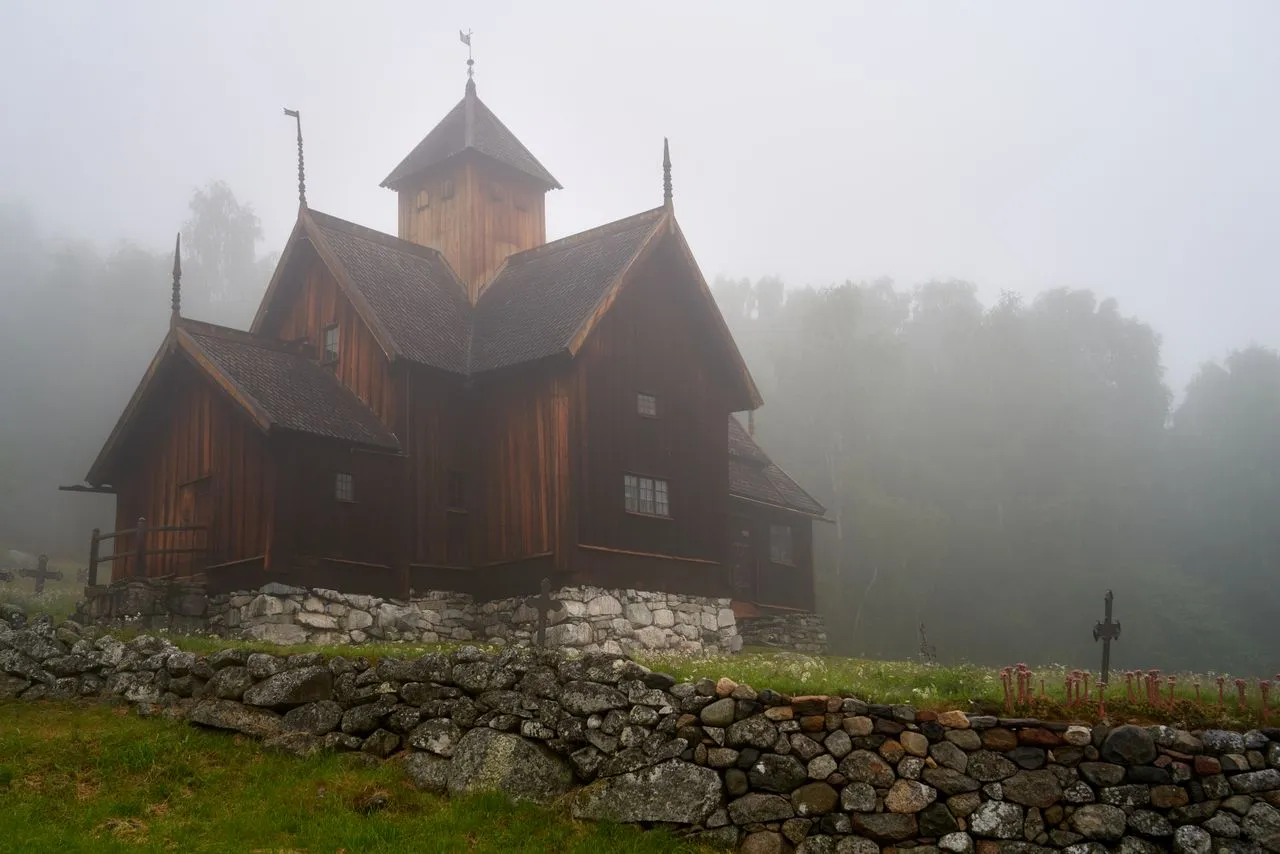
Norwegian dialects vary significantly across regions, often differing in pronunciation and vocabulary.
If you just started learning Norwegian, there is something you need to know: There is no single correct way to speak it. In fact, Norway has no official spoken standard language. Instead, the country is home to a huge number of dialects (called dialekter), and unlike in many other languages, these dialects aren't just used casually at home or in informal conversation. They're used everywhere: at work, on the news, in parliament, and in classrooms.
This is quite different from other Scandinavian languages like Danish or Swedish, which tend to be much more uniform in how they're spoken.
The good news is that Norwegians themselves understand each other across dialects, even though there are some differences in words, accent, and even grammar. That is because those differences between all varieties tend to be small, with some exceptions.
Norwegian dialects are usually grouped into four main groups spoken in different regions of the country. Those groups are:
Eastern Norwegian (Østnorsk) – spoken mainly in Eastern Norway
Western Norwegian (Vestlandsk) – spoken mainly along the west coast
Central Norwegian (Trøndersk) – spoken mainly in Central Norway
Northern Norwegian (Nordnorsk) – spoken mainly in the North
But keep in mind these are just general categories. In reality, almost every town, village, and valley has its own particular way of speaking, and even people within the same group can sound quite different from one another. Think of these four groups as a general guide rather than a set of strict rules.
Here are the four main dialects with their main characteristics, but as we said, this is only a general guide. In reality, people have their own particular way of speaking within each group.
Eastern Norwegian, or Østnorsk, is spoken in the eastern part of Norway, including the city of Oslo. It is one of the most common groups of dialects and is generally quite close to the written language Bokmål.
Because Oslo is the capital and largest city, the way people speak there is heard a lot in national media. However, even within Eastern Norway, there are many different dialects.
Vestlandsk is spoken along Norway's west coast and fjords, in cities like Bergen and Stavanger. This is where things start to sound noticeably different. Here are a few standout features:
The r sound is rolled further back in the throat, similar to a French r, which can make Western Norwegian sound a bit like Danish to outsiders.
Words starting with hv often become k sounds. For example, hvem (who) becomes something like kem.
The word ikke (which means not) is often pronounced closer to ishe.
The verb er (am/is/are) is shortened to just e.
Eg (I) is used instead of jeg.
In the Kristiansand area, the letter k often softens into a g sound.
Moreover, each city adds its own local words too. In Bergen, you'll hear boss used to say rubbish instead of the Bokmål word søppel, and tidi is used to mean funny, while in Stavanger, people are famous for saying the word løye to mean the same thing, funny.
Trøndersk is spoken in and around Trondheim, the third-largest city in the country, which is located on Norway’s west-central coast. This variety also has its own distinct rhythm and vocabulary:
The word not can be said as itj or ikk instead of ikke.
The verb er (am/is/are) becomes e, just like in Vestlandsk.
Nå (now) becomes no.
The pronoun jeg (I) becomes ae.
The word sjø is often tacked onto the end of sentences, roughly meaning you know, so if you hear someone finishing every other sentence with sjø, there's a good chance they're from the Trondheim region.
Nordnorsk is spoken over a huge part of Norway, which goes from Bodø up to Tromsø and even on to the Lofoten Islands. Northern Norway covers such a large area that there's plenty of variation within it too, but these features are those you'll hear across the region.
Like in Western Norway, the sound hv becomes k.
The sound ei is pronounced as written (ei), not slurred into ai.
The letter æ is used for the pronoun I instead of jeg, and ho is used for she.
The r at the end of present-tense verbs often disappears, so er (to be) becomes just e.
A characteristic local and informal way to say hello is hallais.
Svalbard is a Norwegian archipelago in the Arctic Ocean, located roughly halfway between mainland Norway and the North Pole. It is an interesting exception because it doesn't really have its own traditional dialect at all.
That's because the people who live there originally come from all parts of Norway (and many different countries too), each bringing their own home dialect with them. The result is that in this one small Arctic community, you can hear a mix of Norwegian accents from every part of the country.
Since there is not a standard spoken language, you might wonder, how do people speak on television? The answer is simple: Norwegian TV and films don't use one standard language, and actors typically speak in their own natural dialect, whatever role they're playing. If a dialect is especially hard for other Norwegians to follow, subtitles are sometimes added, even for native speakers watching their own language!
The same goes for music. Norwegian singers frequently sing in their own local, home dialect rather than switching to a neutral version of the language. So listening to a singer from a specific region is a great way to get some local words and expressions.
How Chinese keyboard input methods work, including Pinyin typing and other tools used to write Chinese characters.
Serbo-Croatian refers to the closely related language varieties spoken in Bosnia, Croatia, Montenegro, and Serbia.
What makes Somali a challenging language to learn, including its grammar, pronunciation, and unique phonetic system.
A look at the main Albanian dialects, including Gheg and Tosk, and how they differ in pronunciation and vocabulary.
Discover the charming tradition of Bengali daak naam, affectionate nicknames commonly used by family and friends.